Category Archives: indonesian case

existing cases in Indonesia that are actually practices of ‘sustainable’ life style

Creativity comes from the heart

Our Art, Design and Environment class yesterday was taught by Dr. Ratna Panggabean, one of our senior lecturers, from Craft Department. She specializes in textile craft and has spent a substantial amount of time working with indigenous people within that context.

In this class, these art, craft and design students are expected to understand that any artifact that materializes as their creations will have an impact to the environment. They also have to understand how the Spirit to Create emerges within them, which was the message from yesterday’s lecture, of which some points are derived, as follows:

Positive vibes radiate from a person who is overwhelmingly in Love.

Positive vibes radiate from a person who is overwhelmingly in Love.

Each person would radiate whatever aura is within him or her. Therefore, you can sometimes feel uncomfortable with a person, whom you tend to avoid or take a distance from, due to the negative ambiance. On the contrary, you would be attracted to a person who releases good vibes, and you would want to be around the person to absorb the positive energy.

How would one possess the good vibes? It is from feeling Love, for anything. One can be very much in love with another person, or with a pet, or even with the surrounding nature. Among the most known physical expression urged by this feeling is a smile. But people who Create, and who have the skills to materialize their thoughts and feelings, are able to express this overwhelming feeling through their works. This is what sometimes people refer to as Creativity that comes from the heart.

The point of this subject continues to the indigenous people who create objects due to their Love and Respect for nature, for particular moments, for the Greater Being, and for any other things that might come to mind. These artifact, which reflect the sincere feelings, are often created through genuine dedication and a lot of hard work, and therefore bear the consequences of being highly attractive.

=====

This session was like a reminder that one can actually influence another in an individual creativity process. The phrase “You bring out the best in me” might be a form of such phenomenon, where one becomes motivated to perform his/her best. Just imagine if one such process meet another in a collaboration, in projects and/or programs that contribute positively to society, and the environment. It might be a start to something significant if each of us can just enhance our positive vibes!

DesignAction.bdg, coming soon!

Following are excerpts from my tweets about DesignAction.bdg #designthinking #DesignActionBDG #DAbdg #urbanmobility

=====

Prop DAbdg cover.jpg

This year Bandung Creative City Forum (BCCF) will host the 2nd international conference on design thinking: DesignAction.bdg #DAbdg

Now that about 70% of the world population lives in urban areas, “development” doesn’t always mean “giant structures”.

Solutions other than costly infrastructures should fulfill the needs of urban citizens. Creativity and innovation are crucial.

Therefore BCCF looks into #designthinking and urban acupuncture methods to inject creative interventions to the city.

Why Bandung? Because almost 70% of its citizens are below 40 y.o. This demographic bonus is a huge potential with lots of energy.

These dominant, young, productive citizens should be able to make Change for a better living space. The government can’t do it (alone).

DesignAction.bdg brings out #urbanmobility as the theme. Why? Every time we talk about Bandung, this issue comes up more and more often.

Urban Mobility isn’t merely about roads and vehicles. It’s also about mindsets and city elements that cause obstacles in mobility… such as shops in residential areas, cafes without parking space, schools where private cars take and pick up students.

Where laws are weak, solutions should be made from different viewpoints. #designthinking is therefore used and applied.

DesignAction.bdg conference is in Oct, but lots of Pre-Events, equally important, start in March until July 2013.

In March, Riset Indie team will conduct an expert opinion research, so the whole #DAbdg events can proceed with better strategies, based on data.

In April, BCCF will have an internal #designthinking workshop, to experience the design thinking process, facilitated by a former IDEO designer. #DAbdg

In May, Pecha Kucha Night Bandung is on! Gathering public opinions and having conversations about #urbanmobility issues, in a fun way.

In June, Riset Indie is on the role again: providing new experiences in interacting with Bandung’s notorious “angkot” in “Angkot Day”!

July will see the last series of #DAbdg pre-events: Sahabat Kota holds “Riung Gunung”, involving children as co-designers. Children in this workshop are 9-12yo, but they own the city in 20+years. They have to create their own urban space and mobility NOW.

All results, artifact & documentations from these pre-events will be exhibited and presented at #DesignActionBDG conference in October.

The #DesignActionBDG conference itself aims to give recommendations of #urbanmobility solutions other than conventional infrastructures.

We’ll surely publish more details about #DesignActionBDG conference & pre-events. Follow @BCCF_bdg and stick around for updates! 🙂

***Related post: Design Thinking? Design Action! (in Indonesian)

Membeli Kayu Sonokeling, Segoroyoso-Wonosari

Sonokeling merupakan salah satu kayu eksotis Jawa, di mana bagian tengah kayu berwarna hitam gelap dengan urat-urat kayu yang sangat indah. Kayu kehitaman dengan nuansa kehijauan, keunguan, kekuningan, kemerahan, tergantung lokasi dan jenis tanah di mana dia hidup. Wonosari merupakan daerah yg sesuai, ini terlihat dari luas penampang ‘galeh’ kayu yang hampir penuh menutup seluruh penampang melintang batang. Kayu sonokeling ini semakin langka, karena cukup banyak juga industri yang menggunakan bahan yang sama dengan volume yang tinggi, bahkan ada yang diproses hanya dalam bentuk papan dan kemudian diekspor. Kayu ini memiliki kecepatan tumbuh yang lambat, konsumsi nampaknya melebihi kecepatan tanaman ini beregenerasi. Magno dalam 1 tahun hanya membeli maksimum 4 truk atau setara dengan 4x4m3 log (16 btg pohon), mampu menghidupi 35-40 perajin dalam setahun dan terus melakukan penanaman kembali. Saat ini saya telah memiliki 300 batang sonokeling yang saya tanam di lahan sendiri dan ratusan yang ditanam petani di lahan masing-masing secara tersebar.

Singgih S. Kartono, 25 Januari 2013

tanah lereng dipinggir kali kuas ini saya beli murah karena katanya 'wingit' ... setelah dibersihkan dan digarap kembali ternyata menjadi tidak menyeramkan

tanah lereng dipinggir kali kuas ini saya beli murah karena katanya ‘wingit’ … setelah dibersihkan dan digarap kembali ternyata menjadi tidak menyeramkan

setiap membeli pohon ke penebang, saya selalu mengedukasi ke mereka ttg pentingnya melakukan penanaman kembali. dan menyampaikan bahwa saya telah melakukan penanaman kembali. "mas, kalau anda menanam kembali pohon yg anda tebang, rejeki akan terus mengalir"... bhs sederhana semacam ini sering mengena mereka. atau saya juga sering mengajak mereka untuk menjadi pedagang kayu yg berbeda, berbeda karena melakukan upaya penanaman kembali. saya sampaikan ke mereka, menanam kembali tidak membutuhkan biaya besar, hanya perlu niat dan ketekunan menjalankannya.

setiap membeli pohon ke penebang, saya selalu mengedukasi ke mereka ttg pentingnya melakukan penanaman kembali. dan menyampaikan bahwa saya telah melakukan penanaman kembali. “mas, kalau anda menanam kembali pohon yg anda tebang, rejeki akan terus mengalir”… bhs sederhana semacam ini sering mengena mereka. atau saya juga sering mengajak mereka untuk menjadi pedagang kayu yg berbeda, berbeda karena melakukan upaya penanaman kembali. saya sampaikan ke mereka, menanam kembali tidak membutuhkan biaya besar, hanya perlu niat dan ketekunan menjalankannya.

menanam sonokeling, menanam untuk anak cucu kita.. karena kita juga telah dihadiahi oleh kakek buyut kita

menanam sonokeling, menanam untuk anak cucu kita.. karena kita juga telah dihadiahi oleh kakek buyut kita

baru kali ini saya harus melihat sendiri pohon sonokeling yg akan ditebang, ada perasaan sedih dan tidak tega melakukannya... karena pohon ini telah tumbuh puluhan tahun, bisa jadi lebih tua dari umurku sendiri... namun saya bisa merasa sedikit tenang, karena telah lama melakukan penanaman kembali tanaman ini. pohon ini terendam bagian bawah karena baru saja hujan deras sehari sebelumnya. saya sempat khawatir kualitas 'galih'nya kurang bagus, tapi ternyata cukup baik.

baru kali ini saya harus melihat sendiri pohon sonokeling yg akan ditebang, ada perasaan sedih dan tidak tega melakukannya… karena pohon ini telah tumbuh puluhan tahun, bisa jadi lebih tua dari umurku sendiri… namun saya bisa merasa sedikit tenang, karena telah lama melakukan penanaman kembali tanaman ini.
pohon ini terendam bagian bawah karena baru saja hujan deras sehari sebelumnya. saya sempat khawatir kualitas ‘galih’nya kurang bagus, tapi ternyata cukup baik.

keindahannya merupakan rekaman perjalan hidupnya...

keindahannya merupakan rekaman perjalan hidupnya…

harga kayu sonokeling log sekarang ini sekitar Rp. 6 juta/m3, kayu ini semakin langka dan akan semakin mahal. proses penanamannya sebenarnya sederhana, hanya dengan stek akar. namun membutuhkan kesabaran yg luar biasa menanti dia dewasa, bahkan kerelaan ketika kita nanti tidak memanennya. menanam sonokeling adalah menghadiahi generasi penerus kita karena kita telah menerima hadiah tersebut saat ini.

harga kayu sonokeling log sekarang ini sekitar Rp. 6 juta/m3, kayu ini semakin langka dan akan semakin mahal. proses penanamannya sebenarnya sederhana, hanya dengan stek akar. namun membutuhkan kesabaran yg luar biasa menanti dia dewasa, bahkan kerelaan ketika kita nanti tidak memanennya. menanam sonokeling adalah menghadiahi generasi penerus kita karena kita telah menerima hadiah tersebut saat ini.

jumlah lingkaran tahun 23 = umurnya 23 tahun

jumlah lingkaran tahun 23 = umurnya 23 tahun

Greater than Trophies

I know next to nothing about street soccer. I hardly ever felt how it is to be marginalized and socially stigmatized. But I have witnessed how the former becomes a remedy for the latter.

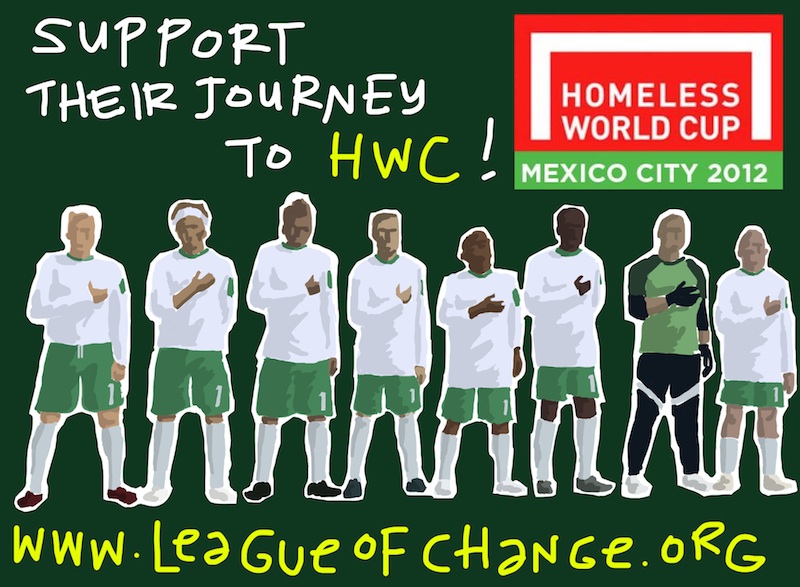
An illustration I made to gain fund in an event

An Indonesian team consisting of people who are either homeless, (former) drug addicts, or HIV/AIDS positive, was invited to participate in the Homeless World Cup 2012 tournament in Mexico. My previous post tells a bit about their initial attempt to raise funding for the trip, which was emotionally quite overwhelming. Eventually, they managed to gather just enough to send the team to Mexico. We saw them off on October 4th, 2012. Then, remarkable things happened…

I am not directly involved with their preparation, etc., so just take my words as a supportive onlooker: this team has become an inspiration for many.

“Why do I have so much faith in them?”

I tweeted one day,

“Because they have the guts to accept their condition and to be better persons”.

Which is true. It’s already hard for them to free themselves from their current circle (poverty, drug addiction, stigmatized illness, along with the social consequences). Their limitation is the one that pushes them forward and proves that their will knows no boundaries. What makes them what they are now is their own might. Each man has to conquer himself and they have gone beyond that. Not just anyone can say such things for himself.

During the tournament, their reputation was built not only of their sporting skills, but also of their charming personality. [Read this article at Detik Sport, for one, then click all the links with the same topics at the bottom of the article for more stories] Although they are entitled to be depressed, they choose not to. Instead, they lift up the spirits of others, and be positive about the game, winning or losing. They got a champion’s attitude.

What’s unexpected was that they made it into the semi-final! They’ve made it to the fourth place, bringing along with them hopes and prides of everyone who has followed their journey. Thanks to the team, all crew, and everyone who supports them, for being unsung heroes for all of us. Tomorrow they’ll arrive in Indonesia, back to their families, friends, communities, ready to inspire more. Welcome home, brothers, we’re proud of you. Quoting Ridwan Kamil (the team’s supervisor) and Ginan Koesmayadi (the team’s predecessor),

“You’re all greater than trophies;

more honorable than any title!”

R E S P E C T !

=====

Relevant links:

Homeless World Cup: http://www.homelessworldcup.org/

League of Change: http://www.leagueofchange.org/

Rumah Cemara: http://www.rumahcemara.org/

Dengan Bola, Kami Hidup!

Dukung tim Indonesia di HWC2012 di Mexico City!

“Menangis itu persoalan lain”, kata Ginan Koesmayadi, ketika disinggung mengenai liputan video yang menayangkan ekspresi keharuannya saat lagu Indonesia Raya dikumandangkan untuk kemenangan tim Indonesia di Homeless World Cup 2011 yang diadakan di Paris, Perancis. “Yah, bagaimana tidak”, lanjutnya, “Saya ini pernah hidup di jalanan, pakai narkoba, masuk penjara. Pokoknya sampah sekali”.  Di HWC2011 itu Ginan mendapat predikat sebagai Pemain Terbaik, tim Indonesia berhasil meraih tempat ke-6 (dari 27 negara) dan berprestasi sebagai Tim Pendatang Terbaik. “Makanya ketika itu, bagaimana tidak haru. Apalah saya ini, apakah pantas untuk dimainkan lagu kebangsaan untuk saya?”

Ginan dan timnya, yang bernaung dalam Rumah Cemara, adalah termasuk kelompok masyarakat yang terpinggirkan karena kondisi mereka, baik sebagai tunawisma maupun pecandu narkoba, hingga pengidap HIV. Namun secara bertahap mereka berusaha melakukan hal-hal yang dapat memulihkan jiwa-raga, menumbuhkan penghargaan pada diri sendiri, dan meningkatkan kepercayaan diri. Mengutip Ginan lagi, “Saya memilih untuk terus main bola, karena saya bisa mencintai diri saya yang bermain bola”.

Tisna Sanjaya berkarya berdasarkan percakapan sore itu, yang hasilnya kemudian dilelang untuk mendapatkan dana bagi tim HWC2012 Indonesia.

Banyak sebenarnya yang dapat diceritakan dari perjuangan mereka dalam mencapai prestasi ini, yang semuanya dapat dibaca di situs mereka, dan bahkan mungkin juga dapat ditonton dari video ketika mereka menjadi tamu di KickAndy. Namun, yang paling penting dari kisah ini, adalah bahwa perjuangan mereka masih berlanjut!

Seusai HWC2011 lalu, tim homeless Indonesia tiba-tiba mendapat undangan lagi untuk berlaga di HWC2012 yang akan diadakan di Mexico City, pada bulan Oktober 2012 ini. Para pemain telah siap dan terus berlatih (mengenai pemilihan para atlet ini bisa dibaca juga di situs mereka), namun salah satu hal yang paling penting belum terpenuhi: biaya keberangkatan untuk berjuang membawa nama Indonesia di kompetisi internasional tersebut.

Terus terang, saya ikut bangga, sekaligus agak malu ketika berpikir: saya yang serba berkecukupan dan sehat jiwa-raga, apakah pernah memperoleh kepercayaan begitu besar untuk membawa nama Indonesia sedemikian rupa, sementara mereka harus berjuang pontang-panting untuk mendapatkan dukungan dalam membela nama negara dan bangsa yang selama ini tidak peduli pada mereka?

Waktu keberangkatan ke Mexico semakin dekat, sementara bekal untuk dapat berangkat ke sana, sekitar 500juta Rupiah, baru 3% terpenuhi. Mari tidak tinggal diam dalam mendukung mereka, apa pun upayanya. Kontak mereka melalui Rumah Cemara di situsnya http://www.rumahcemara.org atau via Twitter @RumahCemara dengan tagar #hwc2011 dan #SatuMimpiUntukIndonesia

Silakan mengunjungi situs League of Change http://www.leagueofchange.org/ untuk dapat mengetahui lebih jauh mengenai tim homeless ini. Di tautan tersebut juga terdapat video dan dokumentasi lain, termasuk cuplikan yang membuat Ginan terharu, yang disebutkan di awal tulisan ini. Dari situs itu terdapat informasi bagi yang ingin donasi melalui transfer ke rekening bank Rumah Cemara, sbb:

Bank Mandiri No Rek 132-00-0765977-5 KCP Bandung Setiabudi a/n Yayasan Insan Hamdani

Berikut ini adalah tautan berita di Kompas Online mengenai sosialisasi partisipasi Tim Indonesia di Homeless World Cup 2012 yang berlangsung sore itu (Jumat, 10 Agustus 2012): http://regional.kompas.com/read/2012/08/10/20462571/ODHA.Tetap.Ada.di.Timnas.Indonesia

Mari usahakan bersama agar tim ini dapat tetap berlaga dan mewujudkan satu mimpi untuk Indonesia!

SERENITY PRAYER*

GOD grant me the serenity to accept the things I cannot change,

The courage to change the things I can,

And the wisdom to know the difference

RC

*copied from Rumah Cemara Twitter background

Science, Technology, Society – 2

Some pointers I noted from the first session of “The Role of Science, Technology and Arts in Predicting Social Phenomena” seminar, held by the Research Group for Humanity Studies (Faculty of Arts and Design), Institute of Technology Bandung on July 11th, 2012.


Forensic Linguistic

From the speech of Prof.Dr. Aminudin Aziz about the role of forensic linguistic in predicting and analyzing social-political phenomena in Indonesia:

A linguist is different from a polygot. A polygot has multi-language ability, a linguist has the ability to analyze languages without having to be able to speak many languages.

Analysis tools

A part of a forensic job is to place someone’s origin based on his/her name and speech intonation, to find a language’s data, to investigate whether a statement is actually made by a certain person.

How? Language has a regular structure. The speaker is consistent in his/her speech.

Patterns

Asian language structure has a circular pattern; the speakers tend to go around and around on a subject before coming right to the point. Anglo-Saxon has a linear pattern; the speakers straightforwardly state their minds. The Arabic language has a parallel pattern; the speakers present one important fact after another, so all these important facts come in a bulk to the audience/ listener.


From the speech of Roby Muhamad, MSc, MA, PhD:

Do we need Science to explain social phenomena?

If a scientist talks about social phenomena, he would likely get responds such as, “I knew that already”, or even “You went to school for that?”

This is because social phenomena can be responded by common sense.

Intuition is good to make sense, to give meanings, but not to understand the world.

Intuition is sometimes wrong, since it’s very specific, acquired from experience that is different from one person to another.

Social phenomena are unpredictable. The most possible thing is to predict the probability. It’s a matter of relevance, so the trick is to predict what is relevant.

It’s a matter of relevance

Internet untuk ilmu sosial adalah seperti teleskop untuk fisika, atau mikroskop untuk biologi. Untuk pertama kali dalam sejarah manusia, interaksi, perilaku dan sikan manusia terekam dalam jumlah besar di Internet.

Kemampuan belajar dan beradaptasi dengan cepat

lebih penting daripada mengantisipasi masa depan


Lots more interested things to be captured, but – as goes the saying – you’ve got to be there to absorb every detail 🙂

A happiness thermometer

Science, Technology, Society – 1

Some pointers I noted from the first session of “The Role of Science, Technology and Arts in Predicting Social Phenomena” seminar, held by the Research Group for Humanity Studies (Faculty of Arts and Design), Institute of Technology Bandung on July 11th, 2012.

From the opening speech by ITB Vice Rector for Academic Affairs and Student Affairs:

The Circle

There is a connection between cellular phones, motorbike-taxi, and the logging of Gunung Kidul forest.  Forest farmers cut down more trees of the forest, even the younger ones, to be able to afford cellular phones and motorbikes. These farmers, who used to use the motorbike-taxi service to get home, are now able to call their sons, who now now have their own motorbikes, to pick them up. The motorbike-taxi service gradually disappeared, and so did the trees, and – following – so did these farmers’ jobs, due to the diminishing woods to harvest. Considering this circle, it is obvious that (the desire for) technology influences social conditions.

The biggest challenges  faced by (American) scientists of today are health, material science and sustainable energy.

So far, engineers have been considering only the output of the technology: function, effectiveness,  and all other tangible and quantifiable results. They rarely consider the intangible result: the impact to society.

From the speech of Ir. Ary Mochtar Pedju, M.Arch:

Technologically excluded regions

Developed countries have science and technology-based economy. Developing countries will never cross the line that borders between industry-based economy and technology-based economy.

Technologically-excluded regions are within a poverty trap. These regions are prone to infectious disease, low productivity and environmental degradation.

Referring to MIT, the traditionally-segregated disciplines: Basic Science & Engineering/Technology and Humanities & Social Sciences, are merging and forming a new group called Science Technology Society, which solves complex, real societal needs/ problems.

We need reformed education.

Science Technology Society

Universities should have inter-disciplinary centers/ labs/ programs that drive the faculties (and then the hierarchic structure), and not the other way around.

An inter-disciplinary “center” should not be a mere physical office(!).  It should be a gate for all local wisdom, a hub for interaction for Government, Business and Academic entities, and should facilitate interdisciplinary projects.

We should examine the cultural & institutional context in which science and technology are rooted.

We need to write history books with broad-based analysis that include the use of technology and how it influence our society in all aspects: economy, politics, etc.

From the discussion session:

There should be a revolution to our middle-school education: eliminate the divisions of Science and Social majors.

Mother tongue: Indonesian?

The Indonesian language is, for most Indonesians, a second language, since it is common for Indonesians to speak a region’s language as their mother tongue. As the impact, Indonesians become non-critical to Indonesian language. Therefore, the term “Speaking Indonesian language properly and correctly” should be replaced with “Speaking Indonesian language appropriately and according to context”.

“We Provide Solutions, not Pollutions”

Bike.BDG logo

Several months ago I posted about bicycle line, intrigued by a documentary video about How the Dutch Got Their Cycle Path. And what would you call a dream come true, although it’s not yet perfect? It turns out that Bandung has its own bike sharing facility now, launched on June 10th, 2012. [Here’s a post about Bike.BDG launching event, etc. at BCCF website, in Indonesian]

Of course security and safety are among the main issues here, but we have to start from something, by creating a certain mechanism that works for our specific conditions. The various ground elevations of Bandung might make it less appealing for people to use bicycle as a daily transportation method, for its impracticality. So Bike.BDG offers a service that mainly aims for short rides, to its 10 designated points in town. Anyone interested in using a bike should first sign up as a member, then s/he is entitled to rent a bike for IDR 3000/hour. So far, users of Bike.BDG are mostly people who are spending a leisure time during Car Free Days, where roads are closed for motored vehicles for a certain amount of time (usually on Sundays, from 6-10a.m.), or people who really needs to reach a distance without relying on angkot (Bandung’s public minibus) and private cars.

Ideally, Bike.BDG aims to reduce traffic jams in weekends and holidays by offering these bikes to visitors, who are suggested to park their private cars at the hotels and take the bike instead to go shopping and sight-seeing. Here are videos that promote the project:

[youtube http://www.youtube.com/watch?v=aweVcjRc5m8]

[youtube http://www.youtube.com/watch?v=M0x7hFLrA7I]

Like all newly-started projects, this one is naturally not free from hiccups, but improvements happen along the way. Perhaps, in this stage, the most crucial thing is to let people (re-)experience the joy of biking, and, further, to make it possible for anyone to use the service without having to buy/own a bicycle. Then, hopefully – as with the case in The Netherlands – even politicians, authorities and decision-makers of the city become familiar with the pleasure of having a city dominated by bicycles, so they can create policies that accommodate city bikes.

It never hurts to build up a dream. Salute to all Bike.BDG volunteers and activators, hope the bike sharing system remains and grows!

How it works

All images belong to Bike.BDG. Further info:

Bike.BDG site: http://bikebdg.com/

Bike.BDG Tumblr: http://bikebdg.tumblr.com/

Desain, Teknologi & Krisis Urban

Berikut ini adalah beberapa pointers dari materi kuliah Ridwan Kamil saat menjadi dosen tamu di mata kuliah Desain Berkelanjutan 2, Program Magister Desain, FSRD ITB, Senin 30 April 2012.

[Catatan lain dari mata kuliah yang sama, 4 Mei 2011: Negotiating a New Indonesia]

Emil saat mengisi kelas Desain Berkelanjutan 2

Science itu ilmu yang mencari kebenaran. Ilmu Sosial & Humaniora mencari keadilan. Sementara Desain itu ilmu yang mencari kecocokan, sehingga sifatnya memang subyektif.

=====

Tidak harus jadi orang kaya utk bahagia. Kita yang hidup di kota kebanyakan harus stress karena konstrain waktu. Ini karena sistem kapitalis yang ternyata sedang menang sekarang.

=====

Kota yang stress akan melahirkan manusia-manusia yang stress, sehingga peran desain menjadi sangat penting (untuk mengobati stress itu).

=====

Jalanan yang makin padat dengan kendaraan pribadi [lokasi: Jl. Dago, Bandung]

Dengan segala keterbatasan kita, kita bisa menciptakan inner sanctum happinesskita.

=====

Kalau ada waktu, lakukan sesuatu yang mikro, yang kalau banyak dilakukan bisa membuat banyak orang bahagia.

=====

“Your city, your responsibility”. Kota tempat tinggalmu adalah tanggung jawabmu juga.

=====

Manfaatkan kelebihan orang Indonesia yang ini: hobi ngumpul. Makanya budaya arisan hanya ada di Indonesia. Buat sesuatu dari situ.

=====

High levels of resource consumption do not reliably produce high levels of well being. It is possible to produce high levels of well being without excessive consumption.

=====

Ada komunitas yg senang-senang saja, tapi ada juga yang based on issues seperti Akademi Berbagi, Indonesia Mengajar, Bridge for Life, dan sebagainya.

=====

Bila sering berperjalanan, kita bisa melihat kebiasaan atau budaya di tempat lain. [Foto: Shanghai, manula berdansa di jalan dan Paris, pasangan ber-tango] –> Mulai dari orang tua hingga anak-anak menemukan kebahagiaan di ruang publik.

=====

Ciri peradaban yang sakit adalah, ruang publik tidak dipakai. Ciri yang sehat, ruang publik habis terpakai.

Deretan warung memakai sisi jalanan, sehingga jalur pejalan kaki menjadi berada di ‘belakang’ warung-warung tersebut. [Lokasi: Jl. Hasanudin, Bandung, sisi selatan RS Boromeus]

 =====

Dari 500 taman di Bandung, yang diurus oleh Pemerintah Kota hanya 200. Lalu harus bagaimana?

Ada konsep 1 taman 1 komunitas: satu komunitas ‘mengambil’ satu taman untuk diaktifkan, seperti yang sudah dilakukan oleh komunitas fotografi, komunitas sahabat anak, dan seterusnya.

Bayangkan kalau semua taman itu bisa penuh terisi. Di akhir pekan, bisa dilakukan wisata taman, tidak melulu harus ke pusat pertokoan.

=====

Jakarta mewakili kota Indonesia.

Yang ditampilkan dari Jakarta selalu high rise building. Namun kaki-kakinya berantakan, baik secara terstruktur maupun organik.

Realita Jakarta adalah yang tidak terurus.

=====

Hidup di Indonesia itu kontras. Sebagai arsitek profesional, ada klien yang minta gedung mahal, sementara ada juga interaksi dengan penduduk kampung lokal yang dapat digarap.

=====

Ciri kota yang sakit adalah: pemerintahnya koruptis, pebisnisnya oportunis, akademianya apatis.

=====

60% orang Jakarta menghabiskan waktu di mal untuk berekreasi. Artinya, tidak ada alternatif lain untuk menghabiskan akhir pekan.  Inilah peradaban yang sedang dibangun oleh kapital. Sementara, utk mencapai shopping mall, fasilitas belum memadai. Akibatnya orang terpaksa berdesak-desakan di jalan raya, dan mengalami urban stress.

=====

Apa gunanya ilmu kalau tidak menyelesaikan masalah?

=====

Kalau Anda tinggal, misalkan, di Amerika, negaranya sudah established in term of urban systems. Di sini, kualitas ruang publik masih menjadi masalah.

Di negara yang sudah berfungsi, kita bisa fokus ke karya sendiri. Tapi di negara yang masih kacau, hati kecil tidak bisa dibohongi. Pasti ada dorongan untuk berbuat bagi lingkungan sekitar.

=====

Jakarta sebenarnya punya uang, tapi uangnya tidak well spent.

APBD Jakarta itu 36 triliun. Tapi kualitas hidupnya: dari 215 kota besar di dunia, Jakarta berada di urutan ke-139 sebagai kota yang nyaman dihuni. Terdapat total 39 faktor sebagai indikatornya, antara lain: political stability, personal freedom, air pollution, quality of healthcare, public spaces, schools, restaurants, theatres, etc.

=====

Urban Explosion: masa depan dunia itu Asia. The most optimistic young people are in Asia.

Dari sisi ekonomi, Indonesia sudah lepas dari krisis 2008 karena banyak yang kelas IKM. Sekarang kita hidup di masa yang ekonominya baik. Tapi masih ada tantangan: ledakan populasi.

Dulu penduduk Bandung jumlahnya 300ribu, sekarang 2,5juta, sementara tidak ada inovasi untuk mewadahi fakta ini.

=====

Harusnya kita bisa menghadirkan produk teknologi yang revolusioner di ITB.  Yang melibatkan partisipasi multi-disiplin ilmu.

=====

Sebelum ada Car-Free Day kita mungkin tidak tahu-menahu mengenai berbagai kegiatan positif di lingkungan terdekat kita. Setelah ada CFD, baru kita tahu ada apa saja di komunitas sekitar kita.

=====

The city is the people. Saat filosofi itu dilanggar, hilang jugalah positifnya.

Yang kita alami sekarang adalah, “kota” mendahulukan mobil, sementara pedestrian tidak ada. Pemikiran orang PU sekarang seperti itu, tidak pernah memperbaiki jalan aspal dengan sidewalk-nya sekaligus.

=====

Hidup “berkelanjutan” (sustainable) itu bisa dengan teknologi tinggi ATAU dengan mengubah gaya hidup. Di negara berkembang seperti Indonesia, lebih cocok dengan strategi mengubah gaya hidup.

=====

Urban Farming, Indonesia.

Power/ kekuatan di Indonesia adalah social cohesion. Indonesia ini negeri indah yang banyak masalah. Di kota-kota besar, banyak unbuilt space yang jadi negative space. Ruang-ruang semacam ini dimanfaatkan menjadi lahan untuk berkebun, yang juga telah menjadi ruang alternatif bagi aktivitas anak-anak.

Bulan Oktober 2011, Urban Farming Indonesia mendapat penghargaan dari Google sebagai Google Web Hero. Alasannya adalah: Internet dipakai sebagai sumber informasi (Google, YouTube), juga untuk menghubungkan orang (Facebook, Twitter). Hanya di Indonesia juga Internet lebih digunakan untuk mengkampanyekan berbagai gerakan. Kita ini masyarakat sosial tapi dekat ke teknologi.

=====

Educating client is the hardest part in design.

=====

Jangan percaya bahwa jalan tol dalam kota itu simbol kemajuan! Keputusan politik dapat menciptakan perubahan. Maju atau tidaknya suatu peradaban itu ditentukan oleh mental orang nomor satunya.

=====

Our fight is the fight for public space.

=====

Keberlanjutan bisa terwujud di level intervensi infrastruktur.

Babakan Asih: inisiatif memperbaiki kampung dengan lintas komunitas kreatif.

Dulu, tiap hujan biasanya banjir selama 3 hari. Sekarang, setelah ada lubang-lubang resapan, 15 menit air bisa surut.

Dulu, harus menggali sedalam 8m untuk mendapatkan air tanah. Sekarang, satu tahun setelah ada lubang-lubang resapan air itu, hanya perlu menggali sumur sedalam 4m. Dulu airnya keruh, sekarang jernih.

Ini adalah tugas kita yang punya ilmu.

=====

Desain sarana publik yg paling tepat utk org Indonesia?

Masalah utama di sini adalah: perawatan, keamanan (vandalisme), dan ‘sense of belonging’.

Pernyataan bahwa “secara sosial kita masih primitif”, mungkin ada benarnya. Karena saat diberi sesuatu yang baru, kaget, kalau tidak biasa, pasti di-abuse.

=====

Ada masalah-masalah yang tidak bisa diselesaikan oleh desain. Jangan-jangan oleh kampanye, oleh pendidikan, atau sekedar dengan ngobrol. Tapi kita tidak akan bisa maju kalau kalah atau bergantung pada semua itu.

Akhirnya penerapan desain memang sifatnya eksperimental.

Akhirnya orang-orang yang punya ekstra (waktu, tenaga, sumberdaya) saja yang melakukan perbaikan. Satu pesan: kalau membuat sesuatu, buatlah yang keren sekali, jangan nanggung, supaya orang segan.

Why do people run out of a building when a quake happens?

Because it’s not the quake that kills them; it’s the building. Why do we make unsafe buildings? Don’t we learn anything from nature that has produced excellent examples of perfect shelters?

One of Prof. Bando’s presentation slides, showing viruses, ‘sheltered’ by their forms

These questions were often heard recently at our department, Industrial Design at ITB, during lectures by Professor Takaaki Bando, from Science of Design Department, Musashino Art University, Tokyo, who has been staying for almost one year in Bandung. His passion toward biomimicry, Buckminster Fuller’s concepts, bamboo and structures is obvious from his energy during the presentations. Now that his one-year period at ITB is almost up, as a closure Prof. Bando conducts a Bamboo Shelter Project. He’ll deliver an open lecture concerning this project so, comprehensive explanations should come from him, but as far as I know, this project is a realization of a shelter concept that is save for people living in it during quakes, flood, and such. The form is obviously a slight modification of a Bucky Ball, which is strongly inspired by structures of virus molecules and the form of Apollo 11 that landed the first human on the moon in 1969 (Prof. Bando has also delivered a lecture concerning interconnected inspirations within the history of great designs).

Detail of the structure’s joint system

This project involves not only students from Industrial Design department, but also from other departments in ITB such as Architecture, Interior Design, Visual Art, Aerospace Engineering, and Civil Engineering.

The realization itself is not without challenge. First, it was the supply of material – in less than one week, around 800 sliced bamboo had to be provided, cut according to the precise, required measurements. A number of requirements had to be compromised, among others concerning the bamboo slices: initially, the skin of the bamboo should still be intact, which was not possible considering the amount of wasted slices that would be generated while lots of slices are needed. This skinless-bamboo condition might affect the strength of the structure, but we’ll never know for sure until we try it full scale. All other flaws, especially the detailed, technical ones that are happening during the building process, are not ones that can’t be solved, and they added to the valuable experience.

How the shelter looked on Day-3: still completing the ball shape, before inserting the platform (support) into the ball

Although not fully equipped with ‘real’ dwelling facilities, this bamboo structure serves as a model of a safe shelter. As Prof. Bando mentioned in one of his lectures, “Design does not explain how society is, but how it can be”. This bamboo shelter is surely the beginning of a process in discovering how humanity may thrive and cope with extreme global changes. So- let’s discuss some more: you’re all welcome to attend Prof. Bando’s lecture on Monday, 26 March 2012 at FSRD ITB!