
World Design Organization (WDO) held the World Design Assembly in Tokyo, of which included a Design Conference on October 28, 2023. The theme is “Design Beyond“, with the background as quoted from the invitation signed by Kazuo Tanaka, Chairperson, Executive Committee World Design Assembly Tokyo 2023, as follows.
Design has progressed along with the development of the worldʼs industries and economies over the past 100 years. However, it cannot be denied that humanityʼs endless desires have contributed to serious damage to the global environment. In addition, the coronavirus disaster has rapidly accelerated the digitalization of everyday life. Between humanity and digital technology, the role that design is expected to play is facing a major shift. What goal should design aim for in order for humanity to live as human while caring for the global environment? Further, what can design do in order to achieve digital technology that allows humanity to flourish instead of being dehumanized by digital technology? Setting 4 sub themes such as Humanity, Technology, Planet, and Policy, we will explore the role of design “beyond” with various people in the design industry.
I was invited to participate in the Planet x Design session, to give a talk regarding “The Possibility of the Design for Climate change”. Beforehand, all panelists were expected to send a short essay on the subject, and here I share mine.


With Eisuke Tachikawa from WDO and Daijiro Mizuno, the session chair

With Dawn Lim, DesignSingapore Council.

Pak Neil El Himam, Deputy for Digital & Creative Industries, MoTCE, a presenter in the Policy panel.

With the session chair and all panelists.
=====

View from the stage
WORLD DESIGN ASSEMBLY 2023 — PLANET | Dr. Dwinita Larasati, M.A.
Not long ago, but seemingly in another life time, the world suddenly had to come to a pause. The occurrence was unprecedented; therefore, at the beginning, nobody knew how to respond, and chose isolation as the safest solution. Households, cities, and countries had to survive within their own means, while attempting recovery. A couple of years after, the situations are mostly under control. The world is ready to push the “Play” button — but how do we proceed, after such significant experience? What did the circumstances teach us about priorities, and — in the context of this session — how do designers contribute to the new humanity narratives for “normal”?
The scope of this discussion would include the phenomena that raised our awareness about how our surrounding environment could actually “heal”, or change for the better, once human activities were forced to come to a halt; about the acceleration of digital technology as the inevitable means of communication, of maintaining social life, of all essential interaction, including the issues of unequal access in many places; about the core needs of humankind, who were forced to give up their “extras” and live within their basic necessities?
The discussion could continue to the discoveries related to the circumstances, countless businesses have faced their demise due to the drastic change of production and consumption activities, but particular kinds of businesses were identified to be thriving and gaining multiple profits. This may be seen as an indicator for priorities, that are shifted towards, among others, healthy lifestyles, preference to organic food and beverage, physical and mental wellbeing, digital transformation, and all factors that support them.
Another remarks may lead to the issues of a change of attitudes and responds towards daily activities. An obvious one is mobility, when being in a crowd in a public transportation is considered as posing a risk to your own health, you would opt to go back to move around in your private motored vehicle. Another one is eating habit, when the trends of slow food and home cooking become too tedious due to difficulties in shopping and interacting with your usual grocers, you would prefer having cooked meals delivered to your house, It is quite practical to order and pay through a digital application, but it has been causing a sharp increase to the number of food package waste.
If we return to the questions, “How do we proceed?”, and “How do designers contribute?”, perhaps we agree that we would rather not go back to the pre-pandemic conditions. The “Pause” moment actually provided us time and space to redefine how humankind works. Designers are among a few professions who should possess more ability to envision the future, fuelled by their skills and empathy. In doing so, designers realise that they should always synergise with other professions in order to turn their design into reality, and to bring positive impacts.
Therefore, this discussion will also include what designers, particularly in Indonesia, tend to create post-pandemic, and how design is taught with related concerns about a future that can accommodate the wellbeing of all living creatures on earth. Considering the contexts of the part of the world where natural resources are highly diverse, and young people dominate the demography, but with challenges of natural disasters, inequality, and so on, designers should be able to come up with ideas and prototypes that support inclusivity.
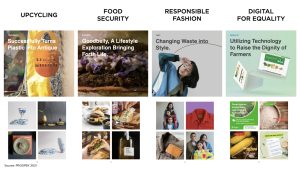
Conclusively, a number of design objects and services will be presented as examples of where we would like to go after pressing the “Play” button, along with their enabling and supporting factors, particularly related to the intersection with humanity, environment, and technology.
=====


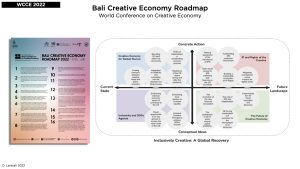




 Pada slide awal ini, diperlihatkan hasil dari WCCE ke-3 yang diselenggarakan di Bali sebagai official side-event bagi G20 2022, berupa Bali Creative Economy Roadmap. Hasil dari WCCE diharapkan merupakan langkah berikut dari WCCE sebelumnya; diupayakan tidak mengulang pernyataan yang sama, namun membangun dari yang sebelumnya. Peta jalan ini bermaksud untuk memetakan prioritas arah pengembangan ekonomi kreatif di berbagai negara, yang ditentukan oleh konteks kepentingan dan potensi masing-masing.
 Slide berikutnya memuat linimasa hingga tahun 2043, di mana diperkirakan bahwa empat kuadran tersebut dapat dibentangkan dalam kisaran tahun-tahun tertentu. Sehingga isu-isu pada peta jalan pun dapat disusun sesuai dengan skala prioritas dan relevansinya terhadap situasi dan kondisi tertentu.
 Slide 6 dan 7 dengan judul inclusivity, informal economy, intermediary, aggregators memuat contoh isu pada kuadran Current State – Conceptual Ideas, berupa riset yang dilakukan oleh (saat itu bernama) International Advisory Council of Creative Industries Policy and Evidence Centre (PEC) yang berpusat di Inggris dengan tema informal economy. Riset ini mengangkat bagaimana beragam praktik ekonomi kreatif di mana para pekerja sektor informal, termasuk usaha mikro dan rumahan, berkontribusi pada rantai produksi barang/jasa kreatif, terutama di negara-negara bagian Selatan (the Global South). Juga model intermediary atau agregator dalam ekosistem ekonomi kreatif, mengenai metoda keterlibatan sektor informal dalam rantai produksi barang/jasa kreatif, merujuk dari salah satu artikel dalam ADBI Policy Brief (2021), berjudul “How Governments Could Better Engage with The Working Practices of The 21st Century Creative Economy”.

 Berikutnya, kuadran Current State – Concrete Action, pada slide 8, 9, 10 dengan judul up-/re-skilling, creativity & innovation in decision making, creative ideas and policy standards, memuat Rekomendasi Kebijakan “Inclusive Creative Economy and The Future of Work” (G20 Riyadh, 2020) yang memuat argumen bahwa ekonomi kreatif merupakan sektor yang berpeluang besar membuka lapangan kerja secara inklusif di masa mendatang (slide 8); penguatan kelembagaan ekonomi kreatif melalui keberlangsungan diskursus di kalangan akademik terkait ekonomi kreatif dan/atau kreativitas pada umumnya (ICON ARCCADE, FSRD ITB) dan pengesahan kebijakan yang didorong oleh komunitas (Perda Ekraf Kota Bandung No.01/2021) (slide 9); serta DesignAction.bdg, workshop Design Thinking bersama pemerintah untuk menguji kebijakan dan/atau menghasilkan cara-cara inovatif dalam menerapkan kebijakan/regulasi bagi seluruh stakeholder kota (slide 10).
 Slide 11 menampilkan contoh penerapan kuadran Future Landscape – Concrete Action dengan cakupan IP, IP marketing & financing in the Global South, mitigation of counterproductive impacts from the digital world. Salah satu model yang sedang berjalan adalah Lokanima, sebuah agregator bagi UMKM konten digital di Kawasan Ekonomi Khusus (KEK) Singhasari di Jawa Timur, di mana upaya untuk pendanaan berbasis kekayaan intelektual dilakukan, namun belum sepenuhnya berjalan penuh sesuai dengan yang dimaksud oleh undang-undang.


 Slide 12-16 mengilustrasikan penerapan kuadran Future Landscape – Conceptual Ideas, dengan tema creative city index, culture-based innovation and future discoveries. Indeks Kota Kreatif (IKK) yang digagas ICCN di sekitar 2016, dan telah melalui FGD lintas K/L dengan dukungan dari Kemenko Ekonomi di tahun 2017 (ketika sektor ekonomi kreatif masih di bawah koordinasi Kemenko Ekonomi), merupakan upaya menyelaraskan antara 10 Prinsip Kota Kreatif ICCN, berbagai existing indexes, dengan indeks kinerja pemerintah Indonesia. Gagasan ini seluruhnya terangkum dalam Buku Putih Kota Kreatif ICCN (2017, 2021), dan menjadi dasar pembuatan dashboard IKK yang dimaksudkan menjadi alat bantu pemda dalam membuat kebijakan.


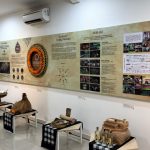
 ICCN melibatkan seluruh anggota jejaringnya di 37 provinsi dalam kegiatan ini. Lokakarya di Bandung (27-29 Juli) sekaligus juga menjadi ajang Rakornas ICCN, bekerja sama dengan penyelenggara mitra Bandung Creative City Forum (BCCF). Rangkaian lokakarya intensif luring dan daring selama beberapa bulan tersebut menghasilkan 37 program di 37 provinsi, berupa (pemberdayaan) penjenamaan kota dan/atau cipta ruang, yang dapat diwujudkan oleh para pelaku Hexa Helix di tiap kota/kabupaten. Seluruhnya terdokumentasi dalam “Buku PKN 2023 – Gerakan Kalcer untuk Jenama Berdaya“; prosesnya terangkum dalam “Modul Lokakarya PKN 2023“, yang semoga dapat segera diterbitkan oleh Kemdikbudristek.
 Salah satu highlight dari rangkaian PKN Gerakan Kalcer dengan ICCN ini adalah dihasilkannya sebuah Rekomendasi sebagai aspirasi para pelaku lintas stakeholder kota/kabupaten kreatif se-Indonesia, yang diserahkan ke Dirjen Kebudayaan Bang Hilmar Farid; dititipkan, untuk dibawa sebagai masukan di Kongres Kebudayaan Indonesia (KKI). Harapannya, tentu saja, butir-butir aspirasi ini dapat diadopsi oleh KKI menjadi kebijakan kebudayaan nasional.




 1
1


